by Ty Tagami | Capitol Beat News Service
ATLANTA — The stalemate in Washington could cause gnawing hunger for more than a million Georgians starting Saturday, when federal funding for low-income food subsidies, informally referred to as food stamps, runs out.
The administration of President Donald Trump has said the government shutdown will cut off money for the program that feeds an estimated 1.4 million Georgians, many of them children.
With Gov. Brian Kemp saying he has no plans to intervene, the only backstop for empty bellies will be private philanthropy, likely to be stretched thin.
Kemp, a Republican, has resisted calls by Democrats to use the state’s more than $14 billion in reserves to offset the disruption of the federal program, which enables recipients to use government debit cards to buy groceries.
The two parties have been waging a public perception war, hoping voters will attribute the pain caused by the budget impasse to the other side.

The fighting had been focused on the federal government and on members of Congress, but now Democrats are trying to localize the brinksmanship.
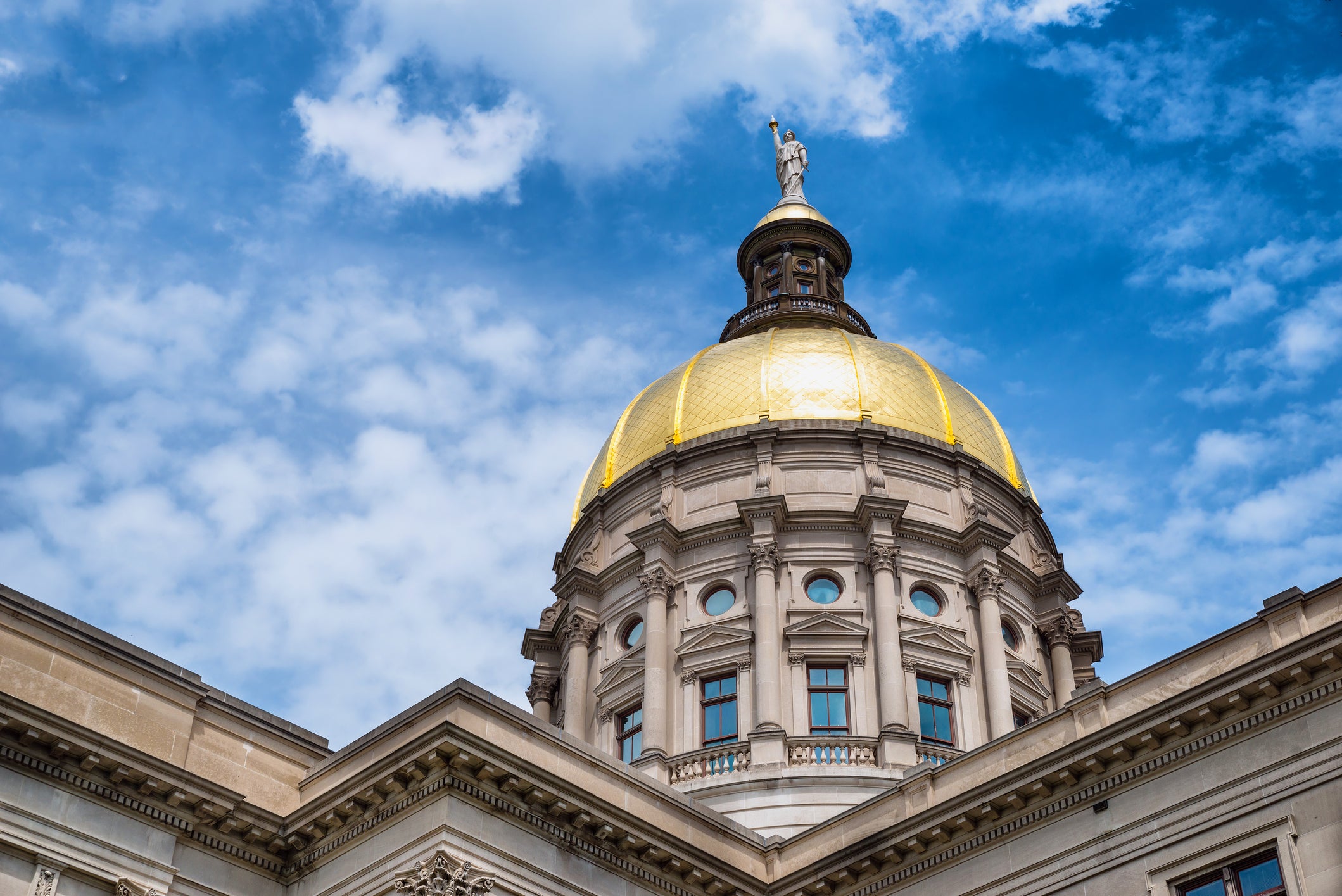
State Sen. Nabilah Islam Parkes, D-Duluth, said she was not politicizing the issue when she held a press conference at the Georgia Capitol Wednesday to demand that Kemp call a state of emergency and deploy the state’s financial reserves to feed the poor.
“Food is not optional. This is not about politics. This is about children eating dinner,” Parkes said, before introducing her former colleague, Jason Esteves.
Esteves, who resigned from the Senate last month to focus on his Democratic campaign for governor, then reiterated Parkes’ demand.
First, he introduced himself.
“My name is Jason Esteves and I’m running to be the next governor of the state of Georgia,” he said, “because Georgians deserve better leadership than they’re getting at this critical moment.”

Esteves noted that many recipients in the Supplemental Nutrition Assistance Program (SNAP) are low-income workers, such as cooks and cashiers, nursing aides and farm hands.
Kemp has not changed his position from late last week, when news of the disappearing SNAP funding became public. A spokesman said the governor was “continuing to echo” a Tweet from his office on Friday, when Kemp called the federal logjam a “Schumer shutdown.”
It was a reference to Sen. Chuck Schumer, the New York Democrat and minority leader of the Senate who has orchestrated numerous votes to defeat a continuing resolution that would temporarily fund the federal government — and restore SNAP funding.
Republicans have been pointing to Democrats’ votes against that resolution as the reason for the lengthening shutdown.
Democrats say they would approve the resolution if Republicans would vote to renew expiring tax credits for Americans who get their health insurance through the market established by the Affordable Care Act.
Premiums are expected to skyrocket next year. Georgians are beginning to realize the personal impact with open enrollment set to begin Saturday, the same day that SNAP funding ends.

Parkes brought a food pantry CFO to speak with her at the Capitol. Alicia Rivera, of Feeding GA Families, said the East Point-based organization with 31 satellite locations across the state had seen 25% to 50% more food requests by families.
Rivera expects Thanksgiving to be difficult.
Parkes also brought Rachel Kent, an unemployed, college-educated single mother on SNAP.
Kent blasted Trump, Kemp and Republicans generally, saying people born with “sliver spoons in their mouths” cannot comprehend how dire things will soon be.
Kent said afterward that she was invited to speak after contacting Parkes’ office because she was offended by depictions of SNAP recipients on social media.
“Not everybody on food stamps is fat and lazy,” she said. “I can’t get a job. I’m trying to. It’s been hard.”
Kent predicted that America could soon resemble the country during the Great Depression in 1929, with people “starving in the streets, protesting.”