by Ty Tagami | Capitol Beat News Service
ATLANTA — Big tech has reached so far into the lives of children that some Georgia lawmakers want to push back.
After legal missteps in an effort to restrain the industry, the state Senate got new recommendations this month from a study committee that heard grim stories about the impact of social media and other platforms.
Among those who testified were parents of children who died by suicide after extensive use of social media and experts who spoke of an escalating mental health crisis after the merger of two technologies.
“Smartphones and social media, they take the person who is vulnerable, who is struggling mentally, and further isolate and distance them from real human relationships,” Dr. Stan Sonu, a medical director at Children’s Healthcare of Atlanta, told the senators at a hearing at the state Capitol in November.
He described a patient who had become withdrawn over the past year, burying his head in TikTok videos. He said the boy had high scores for anxiety, depression and thoughts of self-harm despite a calm demeanor.

Sonu said he initially dismissed the changed behavior, ascribing it to teen angst. Then, the 12-year-old disclosed what had been bothering him: other boys had made him watch sex videos in the school cafeteria, bullying him afterward because of his discomfort.
Sonu said the boy had been using social media to self-medicate.
“Social media is, and I don’t say this lightly, it is legalized digital heroin,” Sonu told the senators. “By leveraging neuroscience to grab a hold of our attention, it promotes this powerful illusion that your real-life problems can be pushed aside.”
The committee is picking up the pieces after the tech industry torpedoed the General Assembly’s last attempt to rein in social media.
The Protecting Georgia’s Children on Social Media Act sailed into law with broad bipartisan support last year, but an advocacy group for tech companies sued.
A federal judge for the Northern District of Georgia ruled in June that the plaintiff was likely to prevail on claims that the law violated the First Amendment’s speech protections. She issued a preliminary injunction against enforcement.

The law required social media companies to make “commercially reasonable efforts” to verify users’ age, and it mandated parent consent for those under 16. It also banned advertising to children.
It had been a priority for Lt. Gov. Burt Jones, a Republican who is now running for governor.
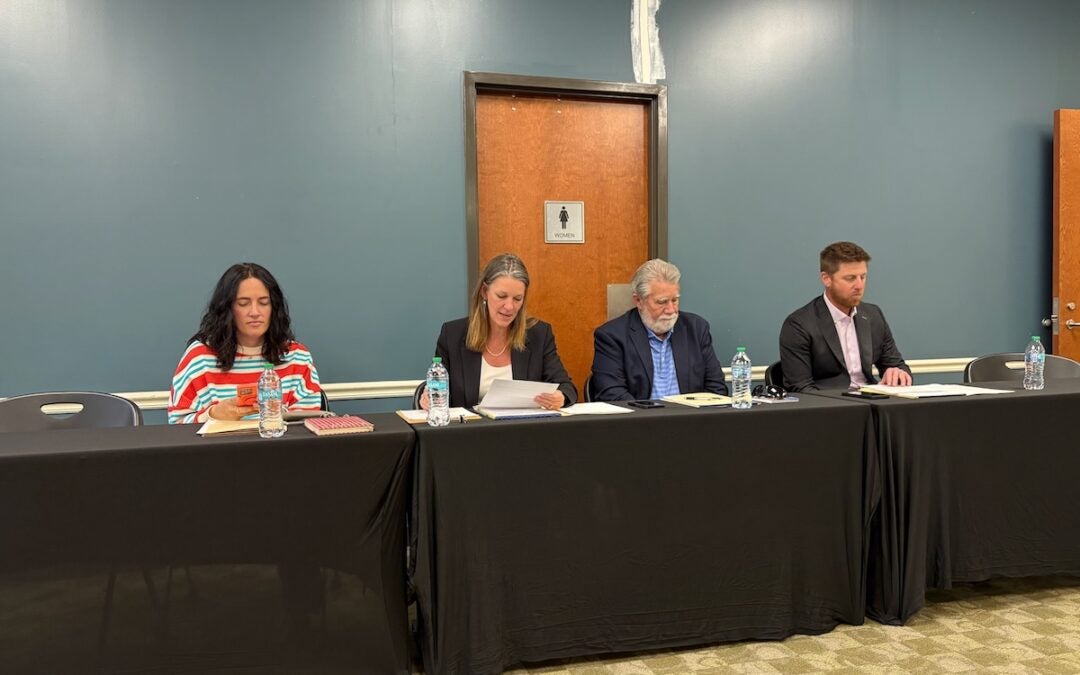
Jones authorized the bipartisan committee — co-led by a Democrat and a Republican — that issued new legislative recommendations in late December.
The committee proposed a prohibition on addictive platform design, stricter data privacy and making artificial intelligence platforms subject to product liability laws.
The committee also backed measures to empower parents, such as a proposal that social media companies secure parent consent before letting minors access their platforms. But that would require age verification by everyone, like the mandate that prompted the federal judge to sideline last year’s law on the grounds that it was a “severe burden” on adults to require them to prove their age.
The committee also recommended expanding on a measure that will go into effect next fall: a prohibition on student use of personal digital devices in public elementary and middle schools. The committee recommended extending the ban to high schools.